The period after completing 12th standard is often described as a turning point in a student’s life, but in reality, it is much more than that. It is a phase filled with expectations, confusion, pressure, and countless decisions that can shape the future of a student for years to come. For many families, especially parents, this phase is equally overwhelming because they are not just thinking about admissions, but also about their child’s long-term stability, career growth, and overall well-being.

In this situation, while students focus on choosing between Engineering and MBBS, what often gets overlooked is the complexity of the admission process itself. The journey is not a single step but a series of interconnected stages, where every decision has consequences. Understanding this process in detail is what separates a smooth admission experience from a stressful and uncertain one.
The first and most important step begins with clarity of direction. A student must genuinely understand whether their interest lies in technology, innovation, and analytical thinking, which naturally leads towards Engineering, or in biology, healthcare, and patient care, which forms the foundation for MBBS. This decision should never be influenced by trends, peer pressure, or societal expectations, because a career is not just about getting a degree. It is about committing to a path for the long term.
Once the direction is clear, the next phase revolves around entrance examinations, which act as the gateway to quality education. For Engineering aspirants, exams like JEE Main and MHT CET play a crucial role in determining the range of colleges and branches available to a student. These exams are highly competitive, and performance in them is directly linked to future opportunities. Similarly, for students aiming to pursue MBBS, NEET is not just an entrance exam but a mandatory requirement, whether the student wishes to study in India or abroad. Preparing for these exams demands consistency, discipline, and a clear strategy, as even a slight difference in scores can significantly impact the available options.
However, one of the biggest misconceptions among students and parents is that the process becomes easier once the exam results are declared. In reality, this is where the most critical phase begins. The evaluation of scores, understanding of ranks, and comparison with previous years cut offs require careful analysis. Many students either overestimate their chances and miss realistic opportunities or underestimate themselves and settle for less than what they deserve. This stage demands not just information, but proper interpretation of that information.

Following this, the counselling process becomes the most decisive part of the admission journey. For Engineering admissions, especially in states like Maharashtra, centralized processes require students to fill in their college and branch preferences in a highly strategic manner. Every choice entered in the system carries weight, and even a minor error in preference order can result in an undesired college or branch. The process may appear technical, but in reality, it is deeply strategic and requires a clear understanding of trends, cut offs, and student priorities.
In the case of MBBS, the counselling process is even more layered and complex. It involves multiple categories such as All India Quota, State Quota, and private or deemed universities. Each category follows its own rules, timelines, and seat allocation systems. For a student and parent who are going through this process for the first time, it can feel overwhelming and confusing. A lack of clarity at this stage can lead to missed deadlines, wrong choices, or even loss of a valuable academic year.

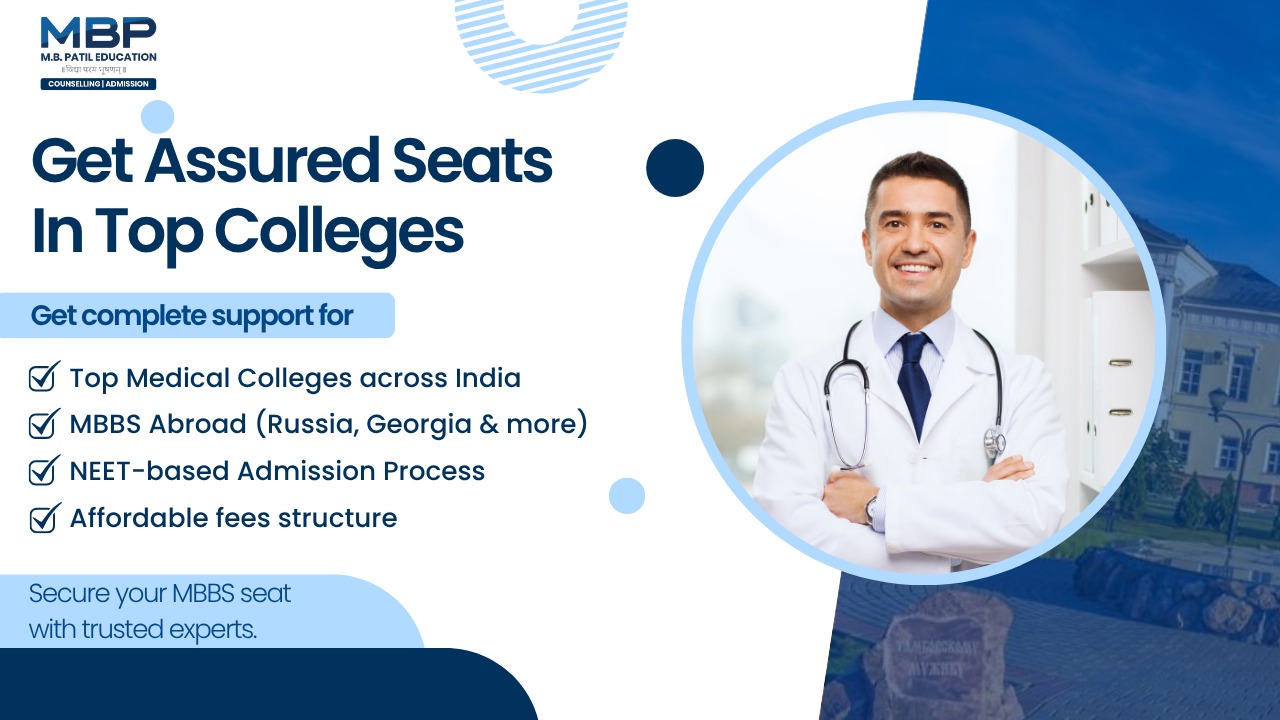
At the same time, an important alternative that has gained significant attention in recent years is the option of pursuing MBBS abroad. With limited government seats and extremely high fees in private medical colleges in India, many students are now exploring countries like Russia, Georgia, and Kazakhstan for their medical education. These destinations offer affordable fee structures, globally recognized degrees, and modern infrastructure, making them a practical and accessible option. However, choosing the right university, understanding eligibility criteria, and managing the admission and visa process require careful planning and reliable guidance.
Another crucial yet often underestimated part of the admission process is documentation. While it may seem like a simple administrative step, it plays a decisive role in ensuring a smooth admission. Students must ensure that all academic records, identity proofs, and required certificates are accurate and readily available. For those planning to study abroad, additional requirements such as passports, visa applications, and medical clearances add further complexity. Even a small error or delay in documentation can create unnecessary obstacles in an already time sensitive process.
As students move closer to securing admission, the final stages involve confirming the allotted seat, completing fee payments, and preparing for the transition into college life. For students staying within India, this means adjusting to a new academic environment, while for those going abroad, it also involves adapting to a completely new country, culture, and lifestyle. This transition can be both exciting and challenging, and having proper support during this phase makes a significant difference.
What truly makes the admission process difficult is not the individual steps, but the fact that all these steps are interconnected and time bound. Missing a deadline, making an uninformed decision, or relying on incomplete information can disrupt the entire journey. Unfortunately, many students depend on random advice, online assumptions, or peer suggestions, which may not always be accurate or suitable for their specific situation.
This is where the importance of structured guidance becomes evident. A well guided approach ensures that every decision is based on clarity, every step is planned, and every opportunity is explored. It removes confusion, reduces stress, and increases the chances of securing the best possible outcome.
M.B. Patil Education understands the challenges faced by students and parents during this crucial phase and provides complete support at every step of the journey. From helping students choose the right career path to guiding them through entrance exams, counselling, college selection, and even study abroad processes, their approach is focused on clarity, accuracy, and personalized attention. They also assist with documentation, visa processes, and pre departure preparation, ensuring that students and parents feel confident and supported throughout.
Ultimately, the admission process for Engineering and MBBS in 2026 is not just about securing a seat in a college. It is about laying the foundation for a successful and fulfilling career. The decisions made during this phase have long term implications, and therefore, they must be made with careful thought, proper planning, and the right guidance.
Instead of navigating this complex journey alone, it is always wiser to seek expert support and move forward with confidence and clarity.